A Sedated “Experience”
Phi-The-Sci: Equilateral Musings

As one gets older, the second law of thermodynamics seems to kick in a bit more with me, and the body starts the process of slowly breaking down.
Unfortunately, I recently scheduled tons of medical visits over a 5-day period. I was not paying attention to the fact that I had bunched these appointments all together. Such appointments consisted of annual visit with my PCP, my every-2-year colonoscopy, and my annual artificial cardiac valve testing. I may work in healthcare, but I hate being a patient even though I am pretty “type A” following up on my personal health needs.

I get my care at the University of Utah.
As I once again underwent my colonoscopy, I was sedated with propofol. I have had a few diagnostic colonoscopies at this point. I also have had very deep sedation with paralyzing agents given to me twice due to open heart surgery.
I like to think about what I am experiencing while I am slowly being sedated. I think about how my body’s nerves are changing based on medication. I try to think about how long I can continue with conscious thought. I have had so many procedures at this point that sedation doesn’t really bother me psychologically as it does to some people. I have friends who are terrified about sedation.
My scheduled colonoscopic examinations always consist of propofol, which by the way, is the same sedation that I use on my own patients as I am a pediatric gastroenterologist. Propofol is an interesting drug. You go into deep sedation very quickly. It is typically given as an infusion. Once the infusion is stopped, it is amazing how quickly one wakes up with no real sedation effects. Propofol works by causing large amounts of chloride to enter postsynaptic neurons. This extra chloride basically “short circuits” the neurons of the central nervous system leading to deep brain sedation. The drug is eliminated quickly through the liver, kidneys and lungs. The multiple paths of propofol’s elimination is why people wake up quickly once the drug is stopped. Honestly, it is an amazing drug.

Propofol
I have had several colonoscopic examinations, one transesophageal echocardiogram (an echocardiogram performed through the esophagus), and two open heart surgeries in which I was exposed to heart-lung bypass. I have always experienced unconsciousness during these procedures.
Weirdly, when I wake up, I do feel that time has passed even though I don’t specifically remember time passing while under sedation. Also, I don’t remember anything during the procedure.
These personal experiences of being potentially close to death (especially with open heart surgery) make me think of the idea of near death experiences (NDEs). Such events have been reported occurring between 6% to 40% of patients who experience cardiac arrest. There is some commonality among those who undergo NDEs…feelings of peace, being surrounded by light, and being outside the human body.
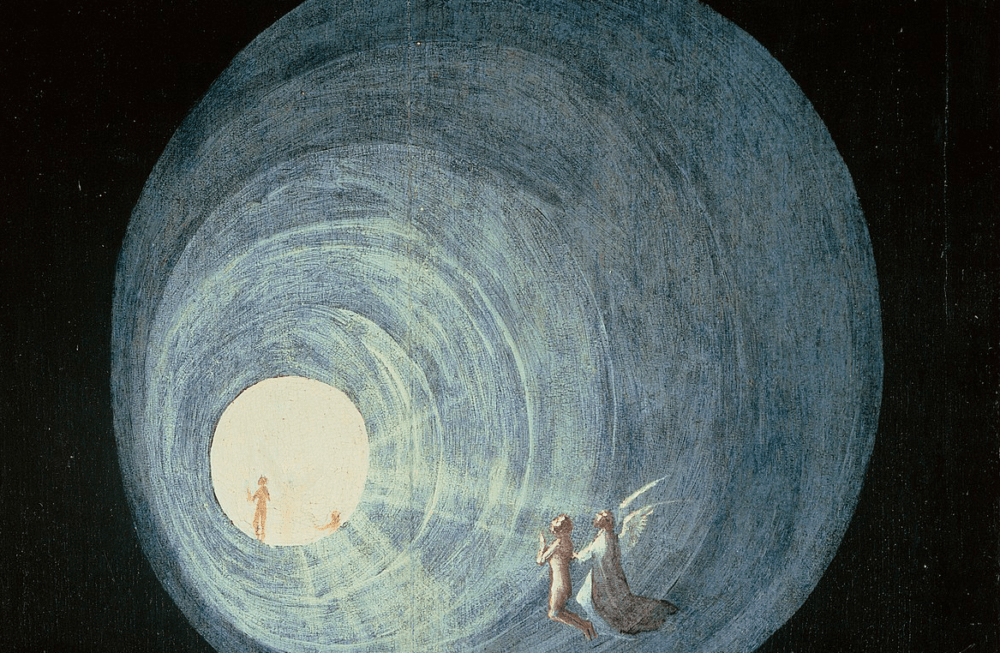
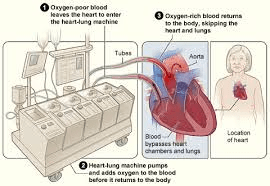
When I underwent open heart surgery for valve replacement in 2012, I did undergo somewhat of a temporary cardiac arrest. It is impossible to replace a heart valve in a beating heart, so potassium is added to the heart to make it stop. My surgery was several hours long. My heart was stopped during some of that time period. Absolutely no NDE happened. I was just unconscious.
My first thought here is that I believe NDEs cannot be studied by the hard sciences. Yes, they can be studied psychologically, historically, and sociologically as part of of human experience or societal experience. I just don’t see how any type of instrument can be used to see if NDEs actually occur. NDEs are not subject to study by mass spectroscopy, Western blot, microscopy, or atomic collider. I think NDEs are filled with subjectivity with little objective illumination. Subjectivity, just like consciousness, often is hard to explain materially.
My second thought is that the older I get and the more I learn, the more I wonder if spiritual dualism can even be a thing. Are we both body and soul? Do body and soul separate at death? Does the soul (or psyche), per Plato, have an eternal existence that was present before and definitely after its associated material body dies? As conceived in much of Western contemporary Christianity, do our souls separate from our body which then are condemned to Hell or blessed in Heaven eternally?
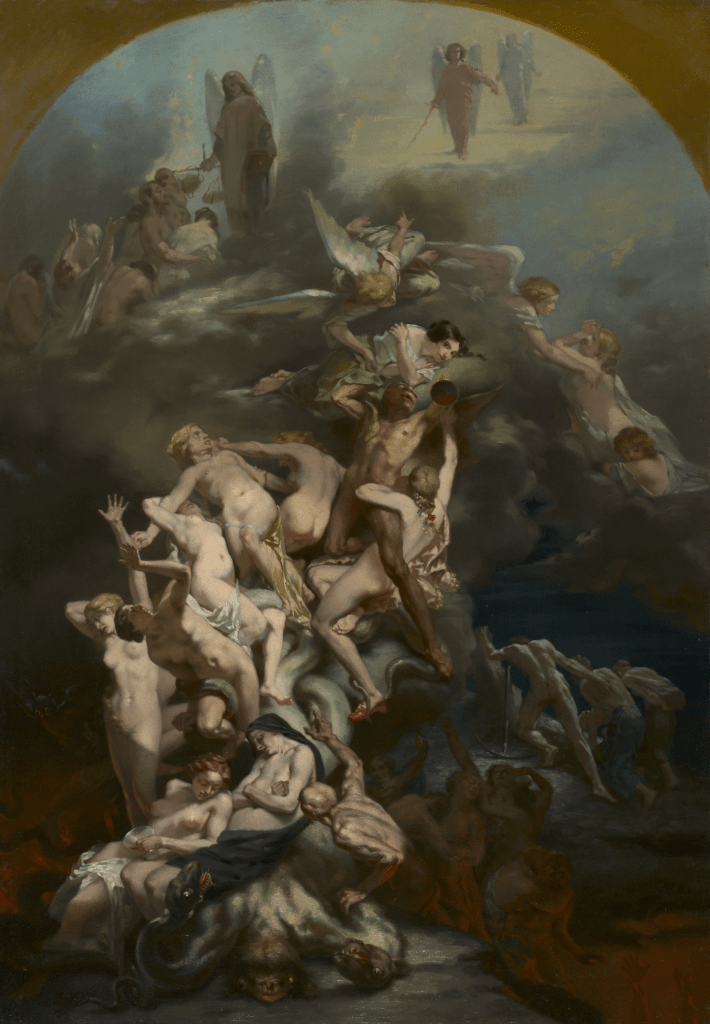
Heaven and Hell, by Octave Tassaert
As we learn about so many aspects of the universe, I wonder if these ideas are even close to possible. As we learn more about the world, does it change our theology? Our philosophy? Our metaphysics? Our thought on what the afterlife means?
The universe appears to be expanding faster and faster. Time is relative and not continuous throughout the universe. Time, in fact, may be structural in the setting of general relativity. A particle and wave co-exist in quantum mechanics. Quantum entanglement exists. Random genetic mutations existing in massive quantities leads to morphological changes in creatures producing innumerable species on our planet. Life began somehow from unalive sources.
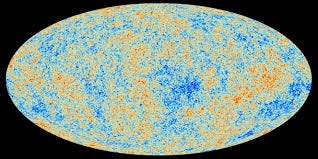
Cosmic microwave background
On the human level, we are living longer and longer. Once deadly diseases are now curable, while at the same time, new diseases are becoming common due to our living longer. We are more urban. We live with electricity. We have many ways of destroying all of human civilization, not just a local village or small kingdom.
For me, the fact that the universe becomes more mysterious despite learning more about it, makes me think we do not have any grasp of what a potential afterlife entails. There may be some objective reality regarding the afterlife that our little human brains will never understand.
In the end, all of our scientific endeavors will still often lead to blind alleys (epistemic limitation) or to alleys that we cannot find (idealism). For me, the fact that a nuclear war or intense global warming could destroy all remnants of H. sapiens, makes me sure that the world is not black and white. The world is not bimodal Heaven or Hell. The effect of our species on the world is simply “gray” in that reality is too complex and too interconnected for us to say, “This person is definitely going to Hell” or “That person is definitely going to Heaven.” We all, to some degree, deserve both credit and blame for what happens locally, geopolitically, and planetarily.

William James in The Varieties of Religious Experience writes the following:
“The difference in natural ‘fact’ which most of us would assign as the first
difference which the existence of a God ought to make would, I imagine,
be personal immortality. Religion, in fact, for the great majority of our own race means immortality, and nothing else. God is the producer of
immortality; and whoever has doubts of immortality is written down as
an atheist without farther trial. I have said nothing in my lectures about
immortality or the belief therein, for to me it seems a secondary point. If
our ideals are only cared for in ‘eternity,’ I do not see why we might not
be willing to resign their care to other hands than ours. Yet I sympathize
with the urgent impulse to be present ourselves, and in the conflict of
impulses, both of them so vague yet both of them noble, I know not how
to decide. It seems to me that it is eminently a case for facts to testify.
Facts, I think, are yet lacking to prove ‘spirit-return’…”
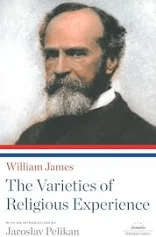
I read his words here as to mean that religious people (such as me) prioritize the existence of God first while everything else becomes secondary to that belief. In other words, if God is the priority or immediate belief, then the afterlife, ideas of Heaven and Hell, and the ideas of the immense number of human religions are simply secondary. As such, these secondary ideas are filled with our subjective beliefs. We cannot prove the miracles of Jesus although we may believe in them. We cannot prove the divine inspirations of Muhammad although we may believe in them. We cannot believe in the eternalities of the Buddha although we may believe in them.
Our individual thesis about the existence or non-existence of God is based on both objective knowledge looking at the world around us which is of equal importance to our subjective feelings, emotions, and beliefs about the existence or non-existence of God. Everything after that (such as ideas of the afterlife) seems to be mainly based on more subjective ideas manifested by all the religions of the world.
How do I think of the afterlife? Well, I think there is an afterlife. Granted, my belief here is more subjective than objective. I do have two thoughts.
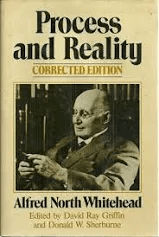
I like Whitehead’s description of God in Process and Reality. Towards the end of the book, he writes that all actualities, all moments in time, all events are, in many ways, kept by God eternally. Thus, “The image — and it is but an image — the image under which this operative growth of God’s nature is best conceived, is that of a tender care that nothing is lost.” All is remembered in God. This “Divine Remembering” could be construed as an eternal afterlife with God always remembering me. I exist in God’s remembrance as does everyone and everything. I consider God’s eternality here as life-giving throughout all of time. I live and create even now in this eternal memory.
My second idea is much more simple. I am kind of an idealist when it comes to the afterlife. I think “we see only a reflection as in a mirror; then we shall see face to face” (1 Corinthians 13:12). I believe in the afterlife, but in a manner similar to how I feel about the universe. I think there is ground here that we will never understand.
Image generated by Gemini Advanced
EE can study NDEs with full empirical and predictive rigor no problem. Just sayin. /smh
Fascinating John, And fascinating Innomen.